Introduction: Eco Travel Has a Branding Problem
Costa Rica is often marketed as one of the world’s leading eco-travel destinations. The word “eco” appears everywhere — eco-lodges, eco-tours, eco-resorts, eco-experiences. For travelers who care about sustainability, this can be reassuring.
It can also be confusing.
Not all eco travel is created equal. In many cases, “eco” has become a label rather than a practice — something added to marketing copy without meaningfully changing how places are built, operated, or experienced.
True eco travel in Costa Rica is not defined by certifications or slogans. It is defined by scale, intention, restraint, and respect for place.
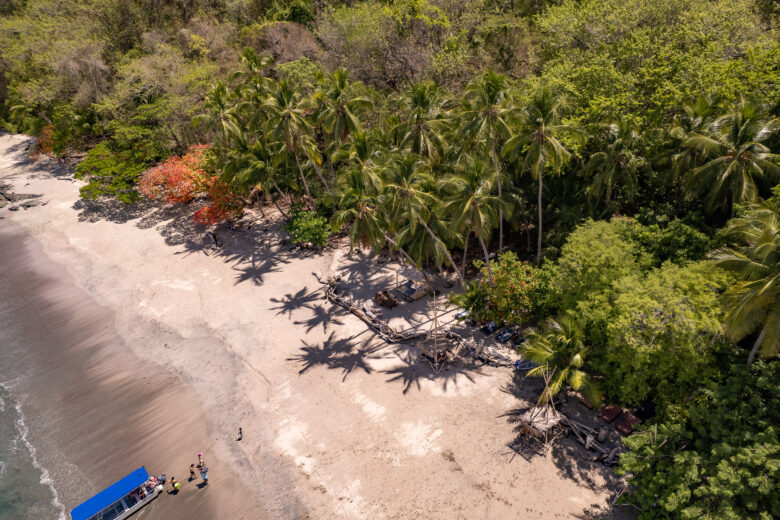
This article explores what eco travel actually looks like on the ground — and why secluded beach environments like Playa Los Vivos naturally support it better than highly developed destinations.
What Eco Travel Is — and What It Isn’t
At its core, eco travel is about minimizing harm while maximizing connection.
True eco travel prioritizes:
- Low environmental impact
- Respect for ecosystems
- Long-term sustainability over short-term profit
- Quality of experience over quantity of guests
Eco travel is not:
- Luxury with a green label
- High-volume tourism with offset programs
- Marketing language unsupported by practice
In Costa Rica, where biodiversity is exceptionally fragile, the difference matters.
Why Costa Rica Became Known for Eco Travel
Costa Rica’s reputation as an eco-travel destination didn’t come from branding alone. It came from policy and protection.
Over 25% of Costa Rica’s land is protected through national parks and reserves. The country abolished its military decades ago and invested heavily in conservation, education, and renewable energy.
This foundation made Costa Rica fertile ground for eco-conscious travel — but popularity also brought pressure.
As demand increased, some destinations grew faster than ecosystems could sustain. Eco travel became diluted.
Scale Is the Most Important Factor in Sustainability
The single biggest factor in whether a place is truly eco-friendly is scale.
Large developments require:
- Heavy infrastructure
- Increased water use
- Waste systems under pressure
- Disruption to wildlife corridors
Small-scale stays, especially on secluded beaches, naturally limit these impacts.
Playa Los Vivos remains sustainable largely because it has not scaled aggressively. Fewer buildings, fewer guests, fewer demands on the environment.
Restraint is not a limitation — it is the strategy.
Why Secluded Beaches Support Eco Travel Naturally
Secluded beaches are often more eco-friendly by default.
They discourage:
- Mass tourism
- High-volume traffic
- Overdevelopment
They encourage:
- Thoughtful planning
- Self-sufficiency
- Respect for natural rhythms
At Playa Los Vivos, the absence of nightlife, commercial strips, and large hotels reduces energy consumption, waste production, and noise pollution — all without forcing guests to “be sustainable.”
The environment does the work.
Low-Impact Design vs High-Impact Luxury
True eco travel starts with how places are built.
Low-impact design focuses on:
- Blending structures into the landscape
- Using natural airflow instead of constant cooling
- Preserving native vegetation
- Limiting hardscape and impermeable surfaces
High-impact luxury often prioritizes:
- Visual dominance
- Climate control everywhere
- Large footprints
- Continuous operation
At secluded beach locations, low-impact design is not just ethical — it’s practical.
Water, Energy, and Reality
Eco travel is not about perfection.
It’s about responsibility.
At remote coastal locations:
- Water is precious
- Energy must be used intentionally
- Systems must work with nature, not against it
Secluded beach stays require guests to become more aware of consumption — not through rules, but through proximity to reality.
This awareness often becomes one of the most educational parts of the experience.
Wildlife and Habitat Protection
One of the clearest indicators of genuine eco travel is wildlife presence.
Where development is limited, animals move freely. Where noise, lights, and traffic increase, wildlife retreats.
At Playa Los Vivos:
- Monkeys, birds, and coastal species remain visible
- Nighttime darkness allows natural cycles
- Habitat fragmentation is minimized
These outcomes are not accidental. They are the result of choosing not to overbuild.
Eco Travel Is Also About Guest Behavior
Sustainability is a shared responsibility.
Eco travel works best when guests:
- Respect wildlife distance
- Use reef-safe sunscreen
- Minimize waste
- Stay on natural paths
- Accept simplicity
Secluded beach environments naturally encourage this behavior because guests feel immersed rather than entitled.
The mindset shifts from consumption to coexistence.
The Difference Between Eco Tourism and Responsible Tourism
Eco tourism focuses on environment.
Responsible tourism includes people.
True eco travel in Costa Rica also considers:
- Local employment
- Fair compensation
- Community integration
- Cultural respect
Small-scale operations are often better positioned to support local economies meaningfully rather than extracting value.
Why Eco Travel Often Feels More Meaningful
Many travelers report that eco-focused stays feel more impactful than traditional vacations.
This is because:
- The experience feels authentic
- There is a sense of participation, not observation
- The environment feels alive, not curated
At a secluded beach, eco travel becomes experiential rather than instructional.
Greenwashing vs Ground Truth
Greenwashing relies on language.
Eco travel relies on outcomes.
Instead of asking:
“Does this place call itself eco?”
Better questions are:
- How many guests does it host?
- How much land does it alter?
- How does it manage resources?
- What happens to wildlife here?
Secluded beaches often answer these questions quietly — through absence rather than claims.
Staying Somewhere That Practices Eco Travel
Los Vivos Beach Experience reflects eco travel principles through:
- Limited scale
- Low-impact design
- Respect for natural soundscapes
- Integration with the landscape
Rather than advertising sustainability, it allows guests to experience it.
That distinction builds trust.
Why Eco Travel Is Not About Sacrifice
Eco travel is often framed as giving something up.
In reality, travelers often gain:
- Deeper rest
- Clearer awareness
- Greater connection
- More meaningful memories
The trade-off is not comfort — it’s excess.
Who Eco Travel in Costa Rica Is Best For
Eco travel resonates with people who:
- Care about environmental impact
- Prefer quality over quantity
- Value authenticity
- Seek meaningful experiences
It especially appeals to travelers drawn to secluded beaches, where sustainability and experience align naturally.
Who It May Not Suit
Eco travel may not suit travelers who:
- Expect resort-style convenience everywhere
- Prefer constant activity
- Measure comfort by amenities alone
Alignment matters more than intention.
Final Thoughts: Eco Travel Is a Practice, Not a Label
True eco travel in Costa Rica is quiet, restrained, and intentional.
It doesn’t announce itself.
It doesn’t optimize for volume.
It doesn’t promise everything.
Secluded beaches like Playa Los Vivos demonstrate that the most sustainable choice is often the simplest one: build less, host fewer, and let nature lead.
For travelers willing to choose depth over display, eco travel becomes not just responsible — but profoundly rewarding.